




Oral Surgery
Wisdom Tooth Extraction
Wisdom teeth, also known as third molars, are the last permanent teeth and usually erupt between the ages of 17 and 25. In about 20-25% of patients, they do not develop at all, so wisdom tooth extraction does not apply to them.
In most people, however, wisdom teeth are present, either all of them or at least some. Their presence, position and eruption direction can be accurately assessed by a dentist through a clinical examination and X-ray.
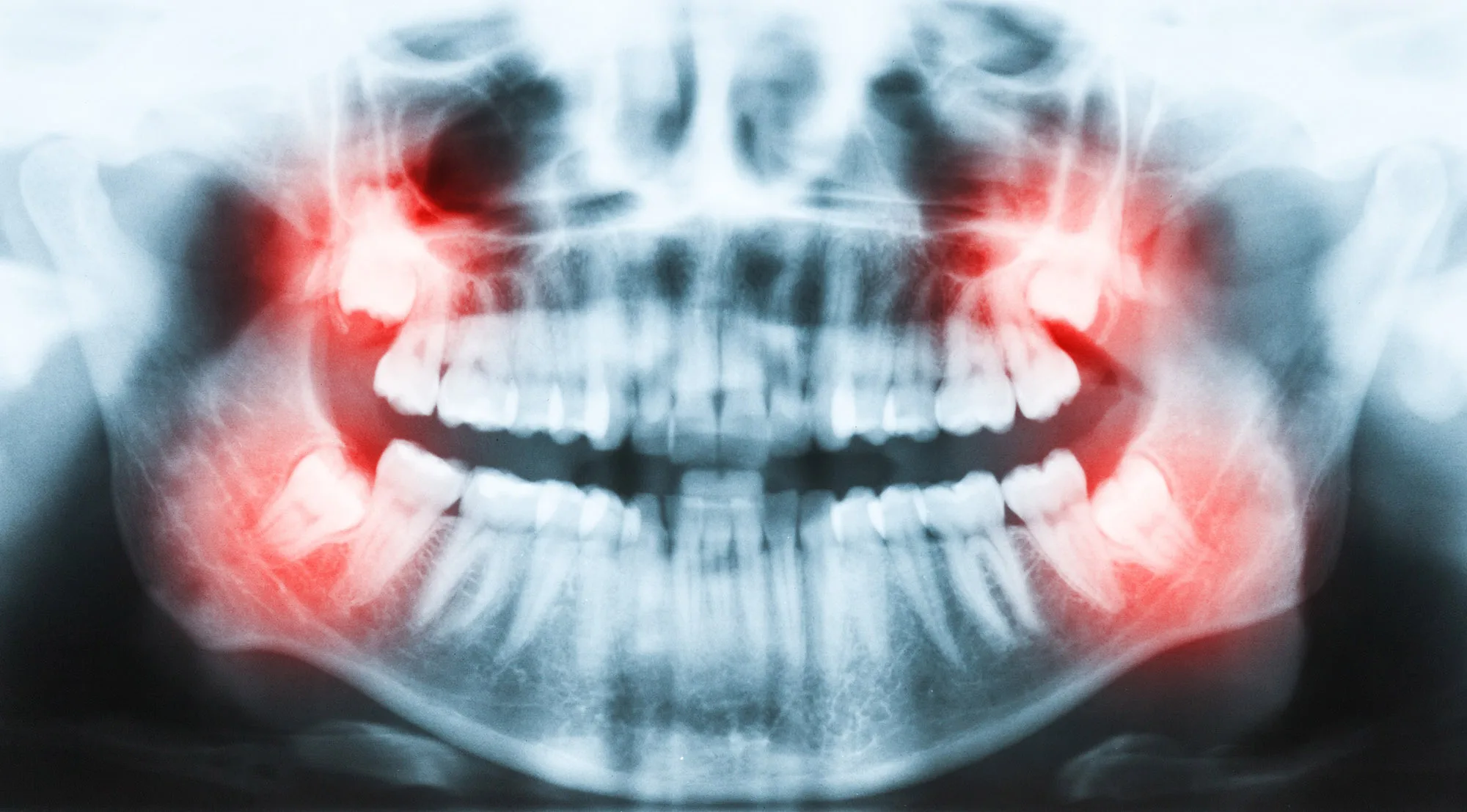
Diagnosis most often uses a panoramic X-ray (OPG - orthopantomogram), which shows:
- the presence of the wisdom tooth,
- its position and placement,
- growth direction,
- spatial conditions in the jaw,
- the likelihood of tooth eruption.
How Can Wisdom Teeth Be Positioned?
A wisdom tooth can be in three different positions in the mouth:
Fully Erupted Tooth
The tooth is fully visible and positioned in the dental arch. In some cases, it can be left in place if it causes no problems and the patient has good oral hygiene.
If the tooth is accessible and the patient can clean it thoroughly, extraction may not be necessary. The doctor also evaluates:
- risk of decay,
- hygiene accessibility,
- tooth position,
- contact with the opposing tooth.
If the tooth is difficult to clean or decays, wisdom tooth extraction is recommended.
Partially Erupted Tooth (Most Common Problem)
Only part of the crown is visible; the rest is covered by gum. This condition often causes acute problems such as:
- sharp pain radiating to the ear,
- swelling of the gum or face,
- difficulty opening the mouth,
- enlarged lymph nodes,
- increased temperature.
The cause is a gum flap under which bacteria and food debris accumulate, leading to inflammation.
In these cases, surgical wisdom tooth extraction is the most common solution.
Impacted (Unerupted) Tooth
The tooth remains completely hidden, located in bone or fully covered by gum and not visible in the mouth.
Impacted wisdom teeth usually do not cause acute pain, but they can lead to:
- inflammation,
- cysts,
- damage to neighboring teeth.
The dentist therefore often recommends planned surgical removal of the wisdom tooth.
How Does Wisdom Tooth Extraction Work?
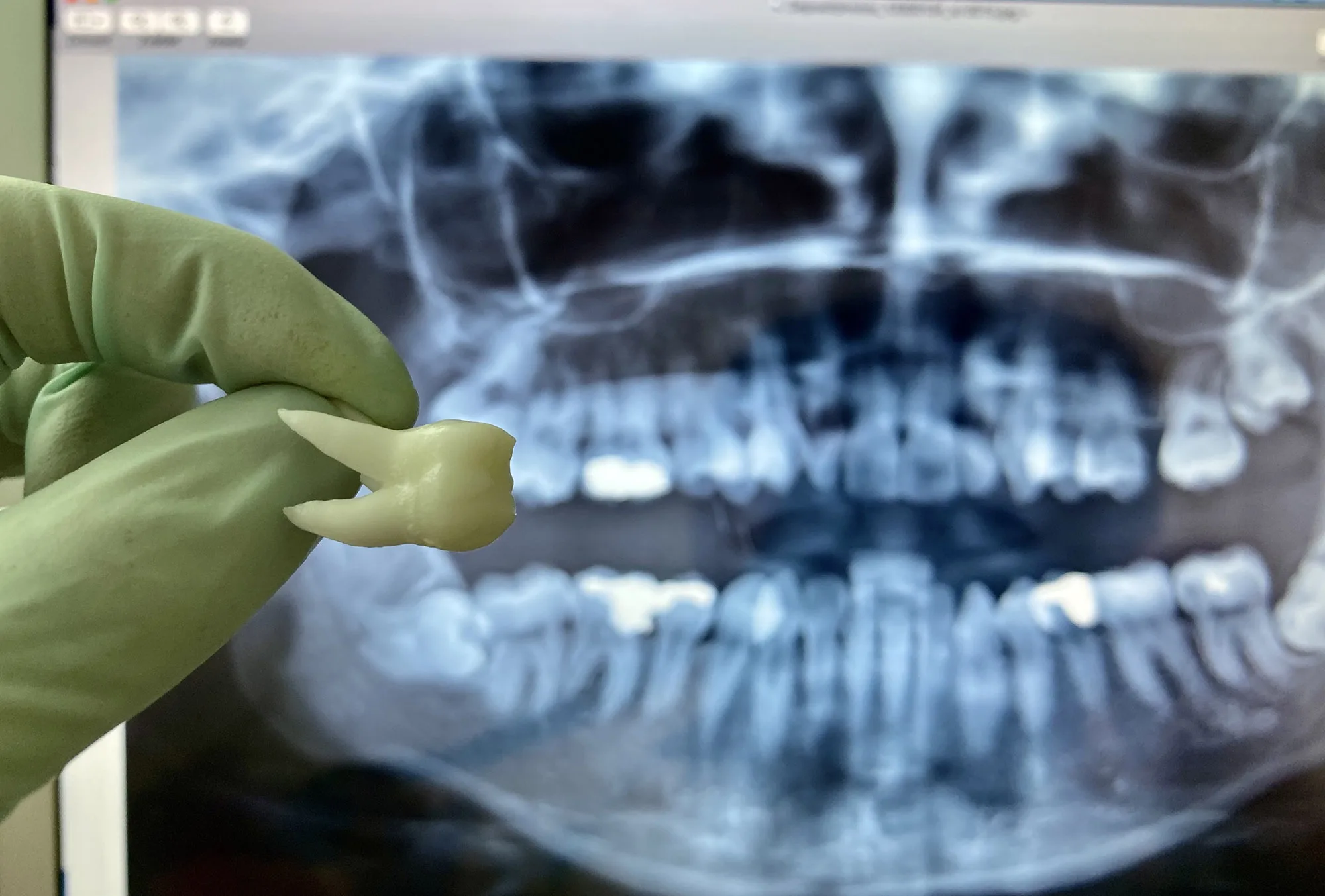
Extraction means removing a tooth from its socket and is performed under local anesthesia.
Simple Extraction
If the tooth is erupted, the procedure is similar to a regular tooth extraction.
Surgical Wisdom Tooth Extraction
In more complex cases, it is performed by an oral surgeon. It may include:
- numbing the area,
- releasing the gum,
- dividing the tooth into several parts,
- removing the tooth,
- cleaning the wound and suturing if needed.
After the procedure, the wound is:
- cleaned,
- checked,
- sutured if necessary.
The patient often receives a gauze pad to bite on to stop bleeding and support clot formation.
The procedure takes approximately 20 to 60 minutes depending on complexity.
How Will I Feel After the Procedure?
Wisdom tooth extraction is usually well tolerated and performed without pain. After the procedure, you may experience:
- mild pain,
- facial swelling,
- limited mouth opening.
These symptoms are temporary and usually subside within a few days. Most patients return to normal activities the next day.
Care After Tooth Extraction
After the procedure, it is important to follow the doctor’s recommendations:
- local cooling,
- rest,
- soft or mushy food,
- careful oral hygiene according to instructions,
- avoiding smoking.
Prevention of Wisdom Tooth Problems
Regular preventive check-ups and X-ray diagnostics (OPG) help detect risky wisdom teeth early and prevent:
- inflammation,
- pain,
- complex surgical procedures.